
Summer Research Project
Spend the summer boosting your US application by pursuing an original research question and producing original work to show for it. For US universities, that's the difference between claiming intellectual curiosity and proving it - a finished paper gives your Common App essays substance, your activities list a genuine achievement, and your recommenders something concrete to point to.
You'll cap the project by presenting and defending your findings to an academic panel at our invitation-only Research Symposium, where the strongest scholars are named Researcher of the Year.
The Programme at a Glance
How Your Research Strengthens a US Application
US universities reward applicants who can prove their curiosity. A finished research paper is that proof: it turns "I'm interested in this field" into evidence you actually pursued it - a real story for your essays, something specific for your teachers to write about, and, through our Symposium and Researcher of the Year recognition, a credential you can name directly.
Students
Ambitious students aged 14-18.
Tutors
Oxford or Cambridge academics or professors, as well as Oxbridge-graduate mentors.Programme Duration
2 hours of individual research guidance meetings with a senior researcher as well as 7 or 10 hours of tuition with a mentor to refine your work, plus offline marking. Sessions are delivered until August 2026 (students can join the programme until 31st July 2026).
Class Size
One-to-one, plus a research symposium in London, August 2026.
Outcome
A truly original research project in an area of personal interest.
What does the Summer Research Project include?
Standard Package
-
9 × 1-hour sessions
-
Reading list + research question formation
-
Iterative feedback / marking
-
Final written report
-
Research Symposium

Premium package
-
12 × 1-hour sessions
-
Reading list + research question formation
-
Iterative feedback / marking
-
Final written report
-
Research Symposium
Secure your spot
Our Tutors
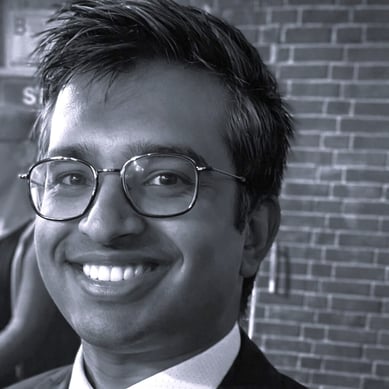
Dr Soham Bandyopadhyay
Dr Soham Bandyopadhyay is an academic neurosurgeon and Research Associate at Oxford University Global Surgery Group and an Academic Fellow at Southampton Clinical and Experimental Neurology Team as well as a Fellow of the Royal Society of Medicine.
Example research projects you could be studying with Dr Bandyopadhyay:
- What is the impact of providing a surgical health service on the climate?
- Are the healthcare needs of women met in the military?
- Is the incidence of certain diseases higher in refugee populations in the UK?
- How equitable is the authorship of research papers internationally?
Dr Robert Waller
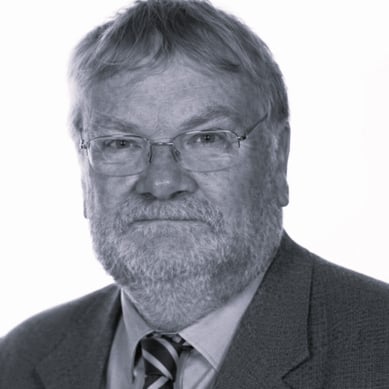
Dr Robert Waller is an academic historian and political scientist. Robert achieved his PhD in Modern History from the University of Oxford, becoming a Research Fellow at Magdalen College Oxford, as well as a tutor in History at Wadham College and a tutor of Politics at Trinity College. Robert has also held a Professorship in History and Politics with the University of Notre Dame.
Example research projects you could be studying with Dr Waller:
- Why do different parts of the UK vote as they do?
- Donald Trump and Conspiracy Theories
- The effects of different electoral systems within the UK and/or in other countries
- Nazism / Communism in Germany in the 20th century: causes and effects
- The extent of social change in Britain in the 1960s and 1970s e.g. the ‘Swinging Sixties’, women’s rights, youth movements
- The impact of immigration in Britain from the 1940s to the present day
- Issues of housing in Britain in the past century
Changes in the nature and social and political impact of new media from the 1950s to the present day
Dr James Henry Scott
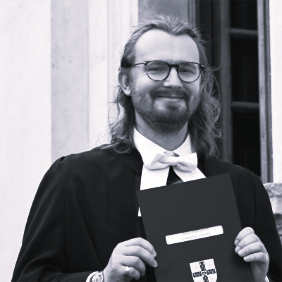
James Scott MPhil MA PhD. BA Psychological and Behavioural Sciences (double first class; subsequently converted to MA); MPhil Biological Anthropological Science; PhD Psychology
Dr Scott’s primary interest concerns the relationship between language, mind and evolution. His PhD research in Cambridge continued this thread, and allowed him to construct a broad and highly interdisciplinary project spanning cognitive psychology, linguistics, human evolutionary biology, and experimental archaeology.
Example research projects you could be studying with Dr Scott:
- Feeling Through Speaking: to what extent does language influence our emotions?
- The Mind’s Programming Language: the role of words in thought
- The Handy Man: the role of tool use in human evolution
- Ug: reviewing the evidence for Neanderthal language
- Consciousness: investigation, structure, and function
- Subterranean Symbolism: art in human evolution
- Two-Tongued: the effects of bilingualism on the brain
Frequently asked questions
We are taking enrolment now for our 2026 programme which begins in April and our symposium for candidates will be held at the end of August. You will be able to use your 9 hours of mentoring however you would like between that time.
The sessions are held online.
You will pick a broad subject area initially, which will allow us to match you to an appropriate tutor. During your first sessions you will be working with the tutors to hone in on a specific research area unique to you.
We can support with any academic subject, from Physics to History. However, we cannot support more practical subjects such as art or design.
Our tutors are matched by us to ensure that we select the most experienced and relevant tutor for you.
We support you during the writing of the project to ensure that you are formatting your project in alignment of any publication requirements. We will also provide a general training session on how to submit projects for publication. We will not submit the project for you.